Case Studies
End-to-end design and strategy projects documenting the full process — from problem framing through research, ideation, and recommendations.
Marketing · AR · UX Strategy · University of Waterloo
A marketing case study analyzing Sephora's AR Snapchat Lens launched during Ramadan 2020 — then building a strategy to expand AR beauty adoption in North America with a focus on Toronto. The core question: how do we make Sephora more digital and effectively market it online?
Program
Masters of Digital Experience Innovation, University of Waterloo
Year
2025
Type
Marketing Case Study
Focus Market
Toronto, Canada
From the slides
Design thinking process
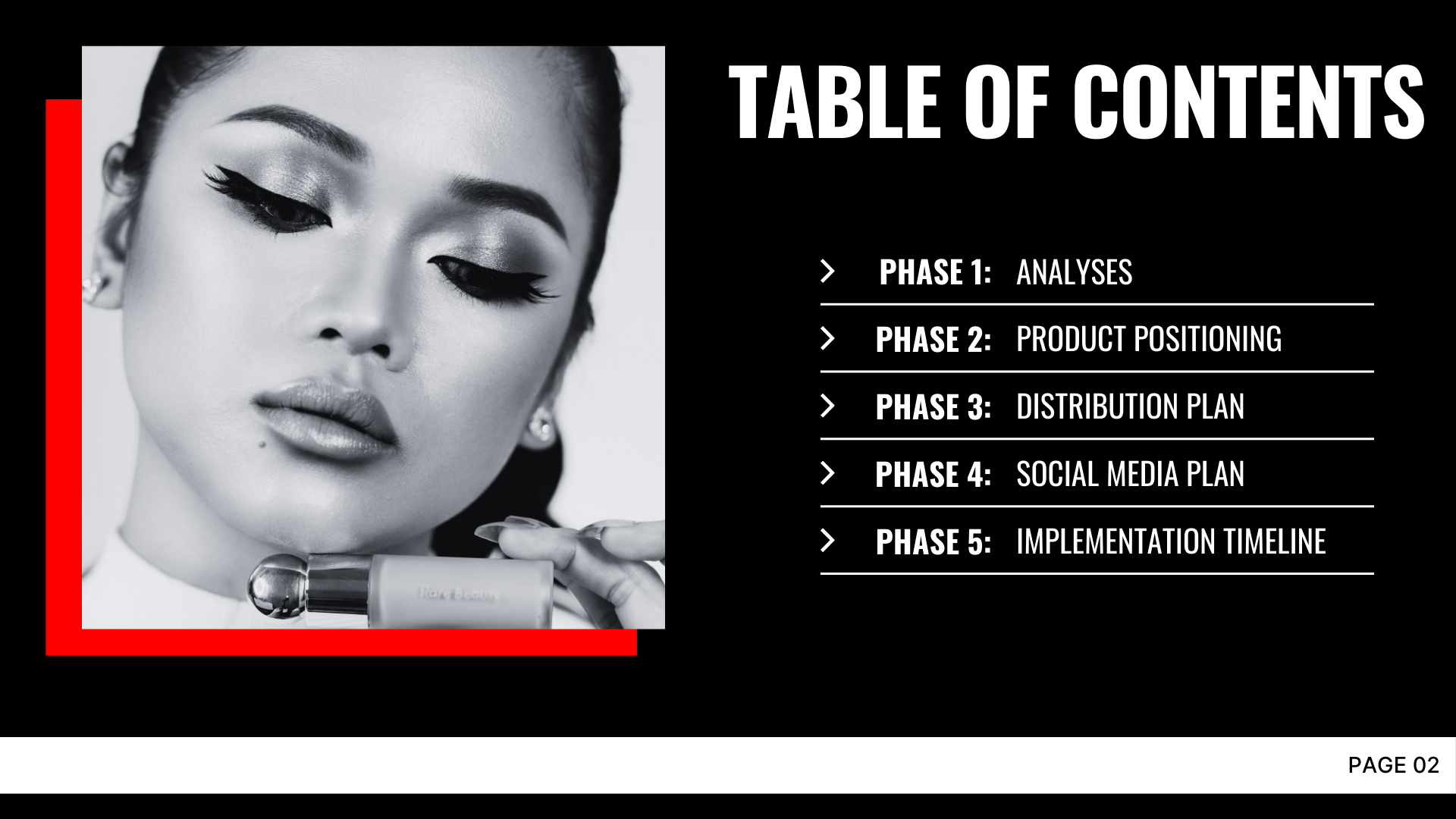
Phase 01
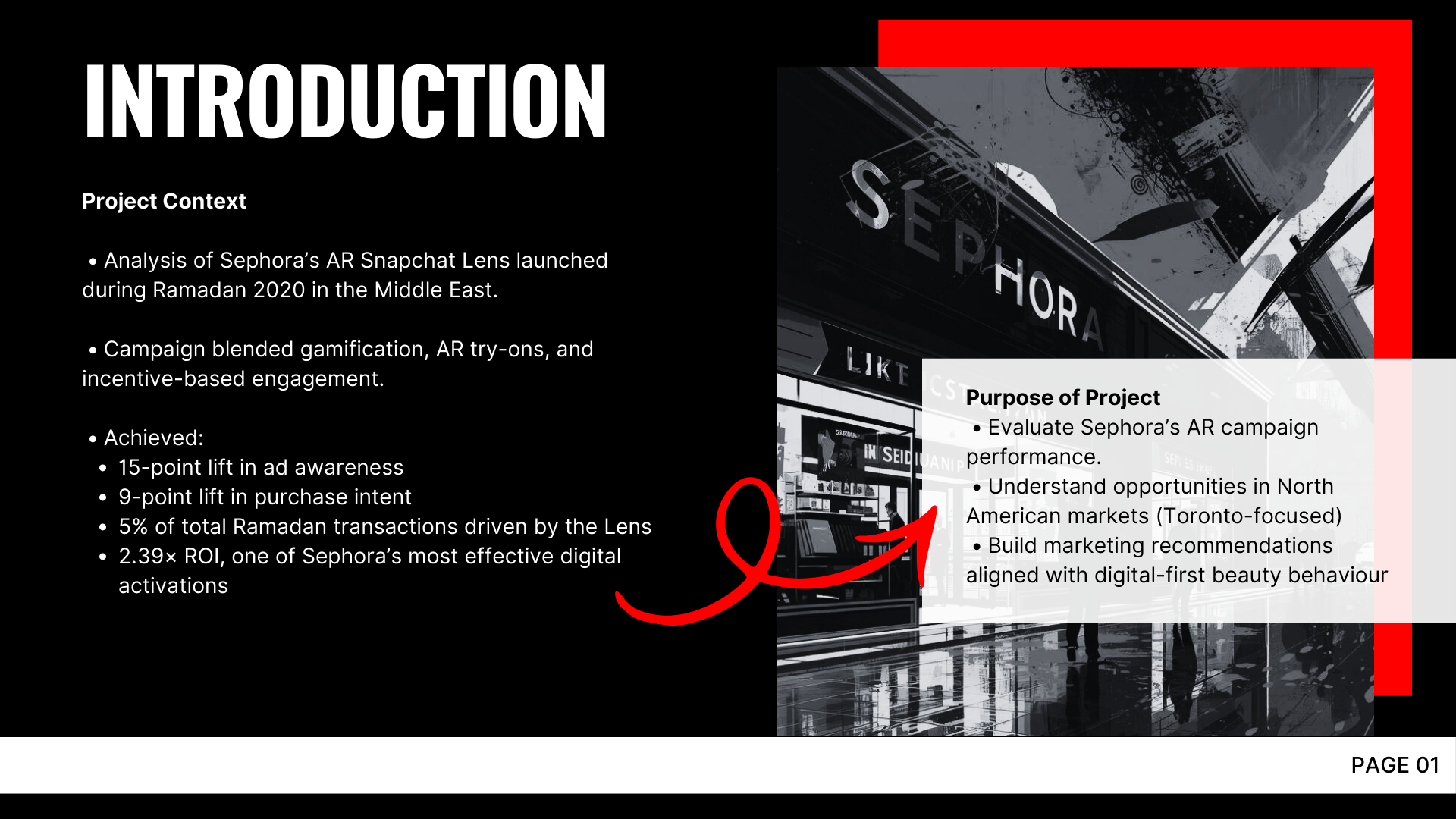
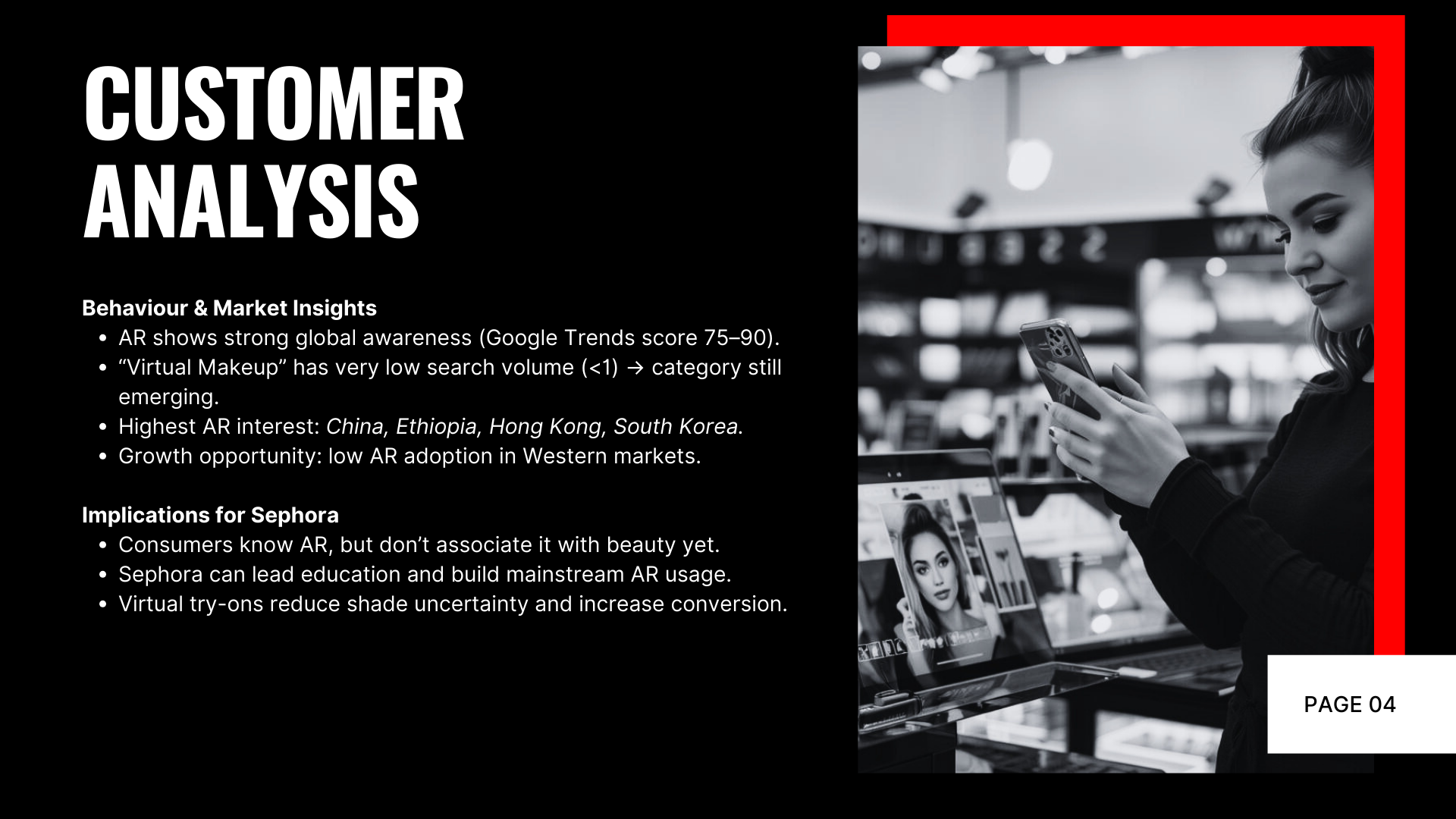
We began by analyzing Sephora's AR Snapchat Lens from Ramadan 2020 — one of the brand's most effective digital activations, blending gamification, virtual try-ons, and incentive-based engagement.
15pt
lift in ad awareness
9pt
lift in purchase intent
2.39x
ROI on activation
5%
of Ramadan transactions
The core problem: how do we replicate this in North America? Consumers know AR but don't associate it with beauty yet — Sephora has a first-mover opportunity to lead that education.
Phase 02
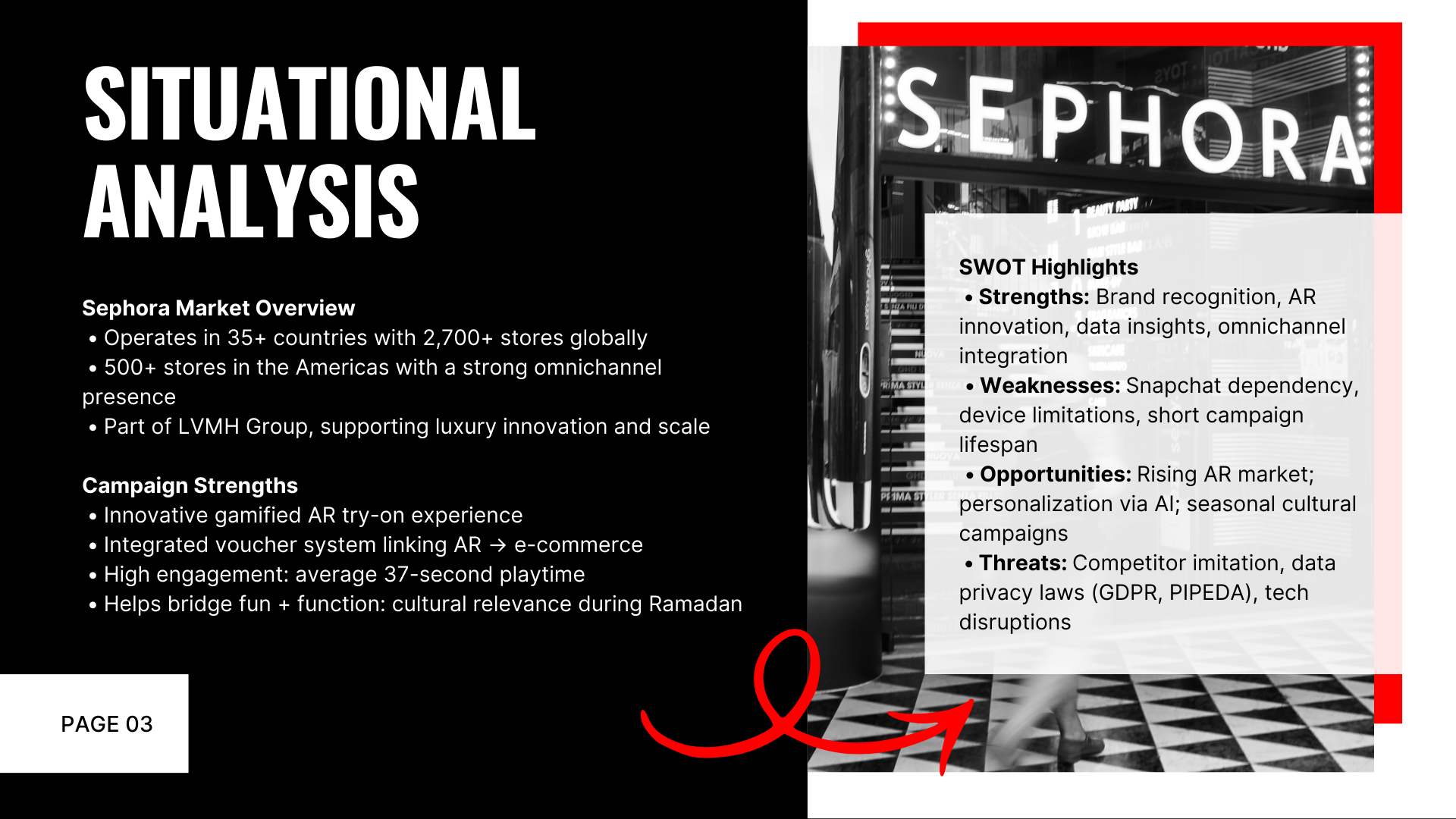
We conducted a SWOT analysis, Google Trends research, and competitive analysis. Key finding: AR has strong global awareness (score 75–90) but "virtual makeup" has near-zero search volume — the category is emerging and Sephora can own the narrative.
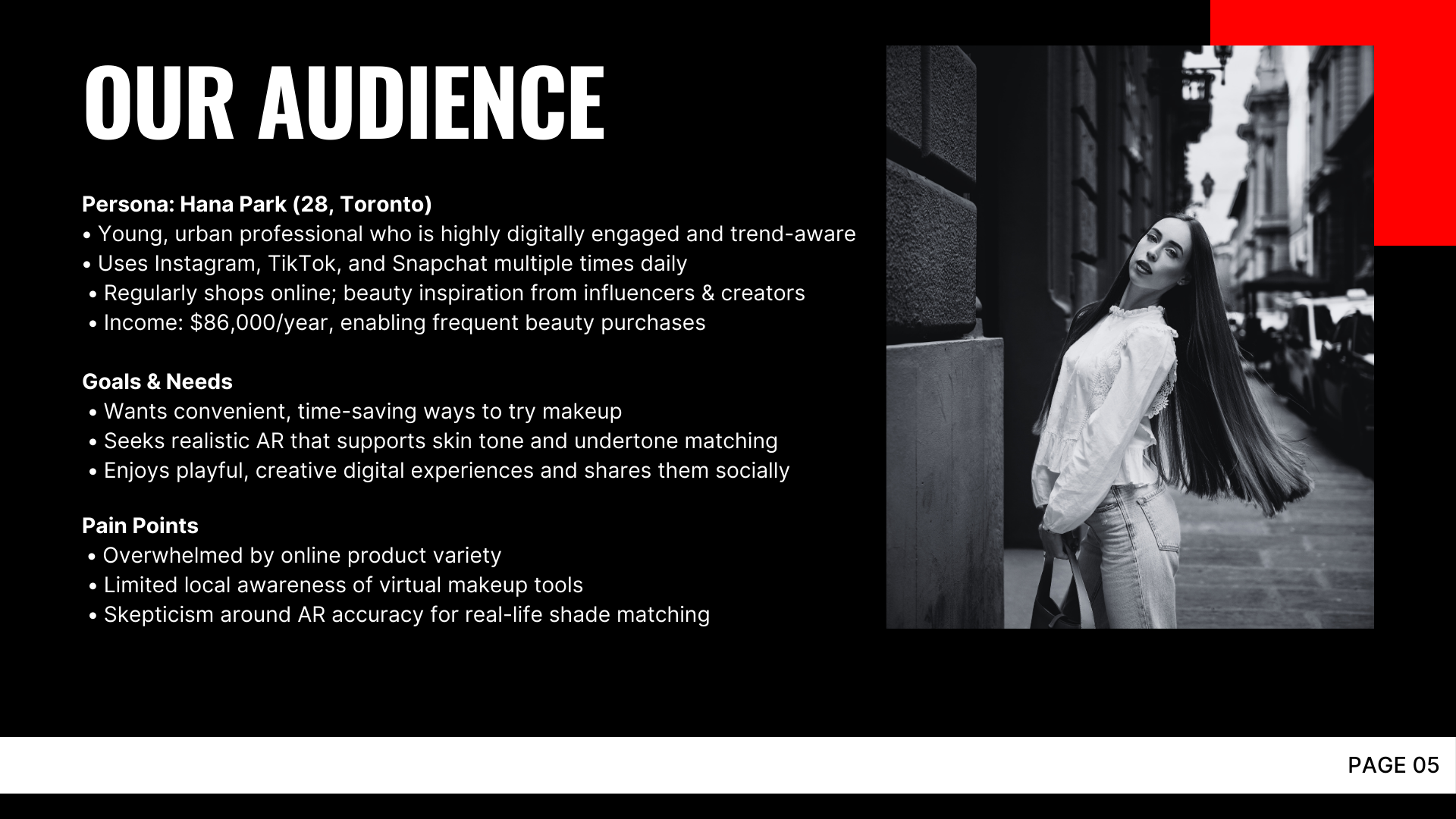
Primary persona: Hana Park, 28, Toronto — urban professional, heavy social media user, shops beauty online but skeptical of AR accuracy for real-life shade matching.
Phase 03
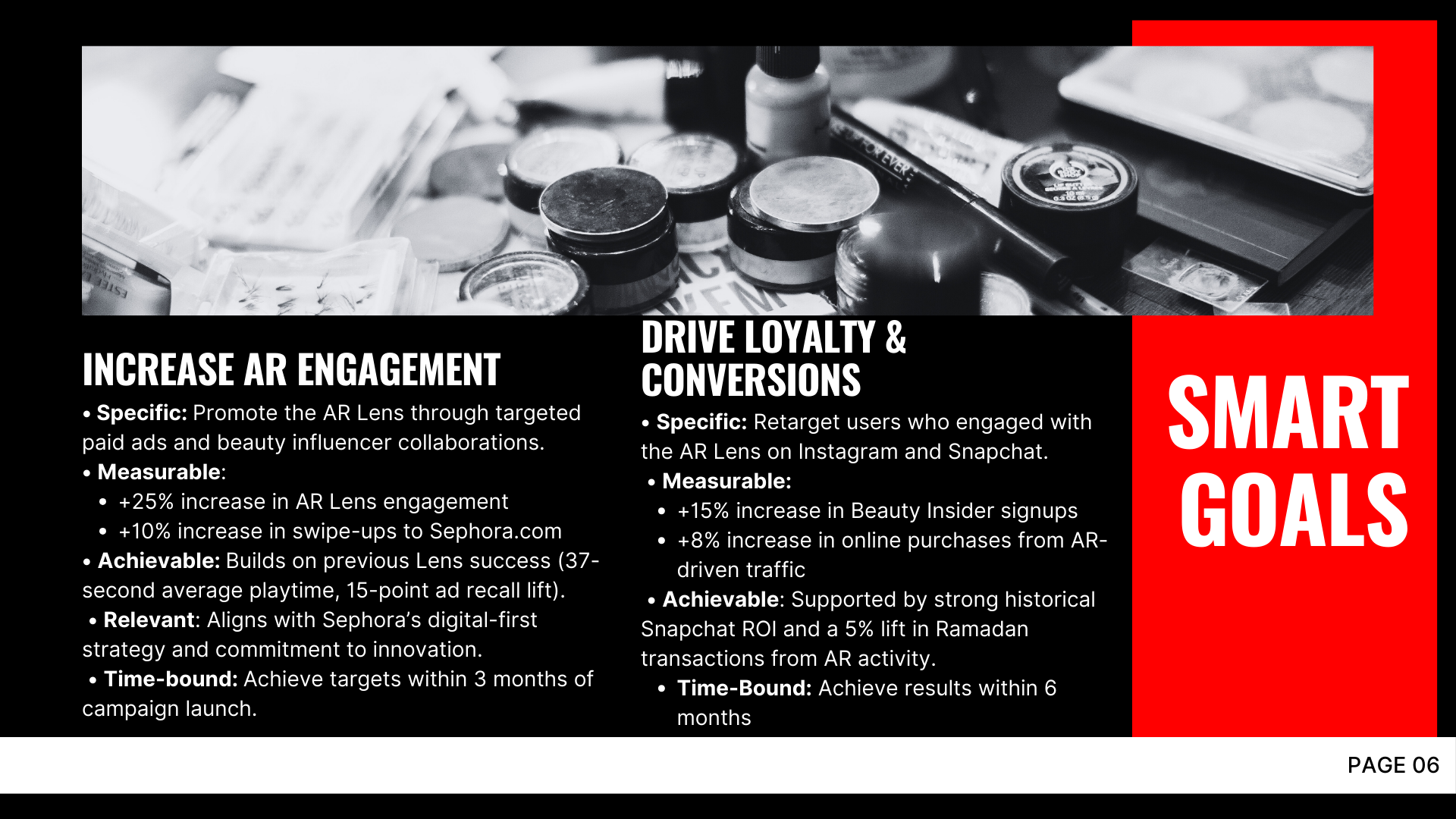
Two SMART goal tracks: increase AR Lens engagement +25% and swipe-ups +10% within 3 months; drive +15% Beauty Insider signups and +8% AR-driven purchases within 6 months.
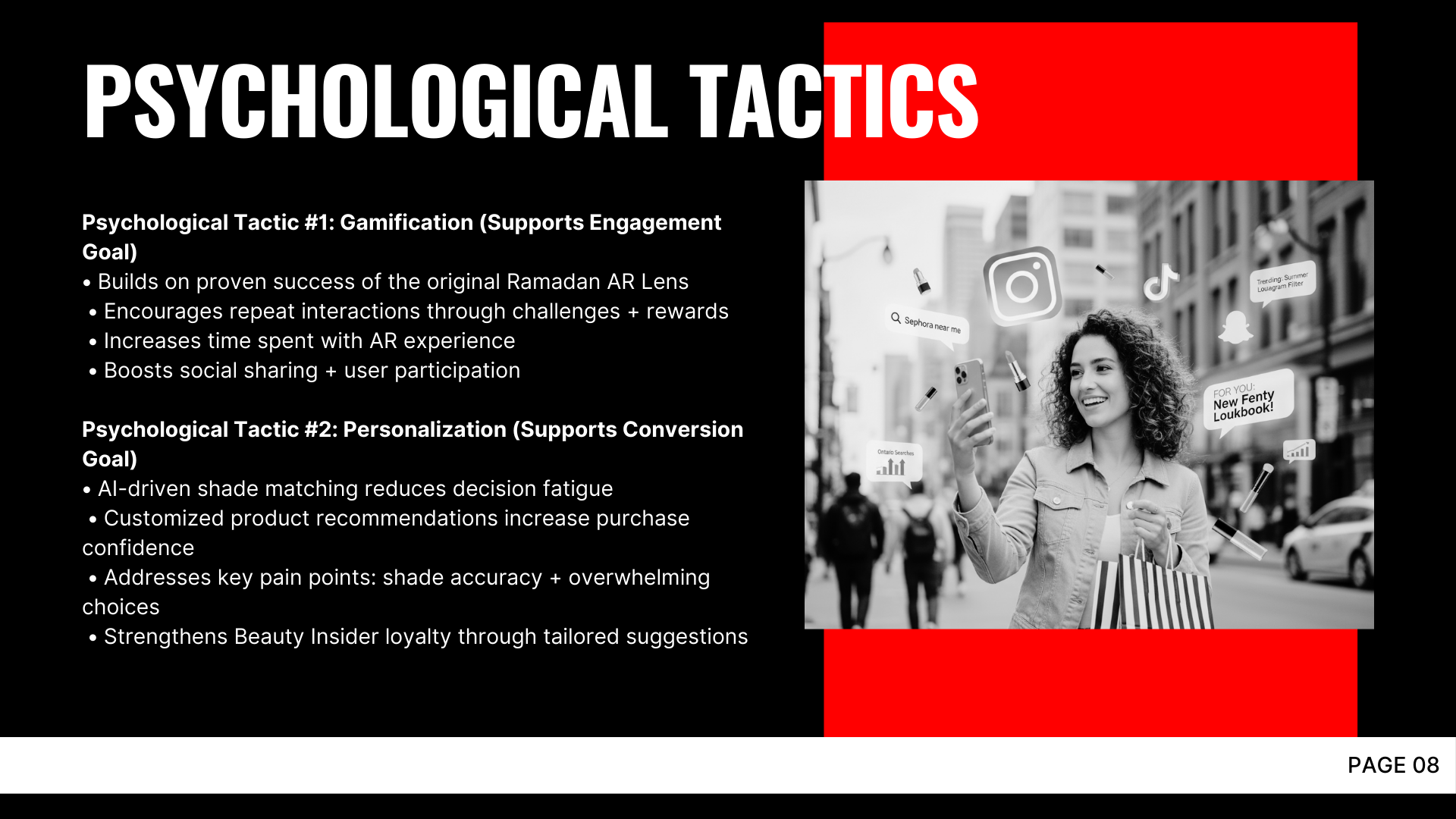
Two psychological tactics: Gamification — challenges, rewards, social sharing loops. Personalization — AI-driven shade matching that reduces decision fatigue, the #1 barrier to purchase conversion.
Phase 04
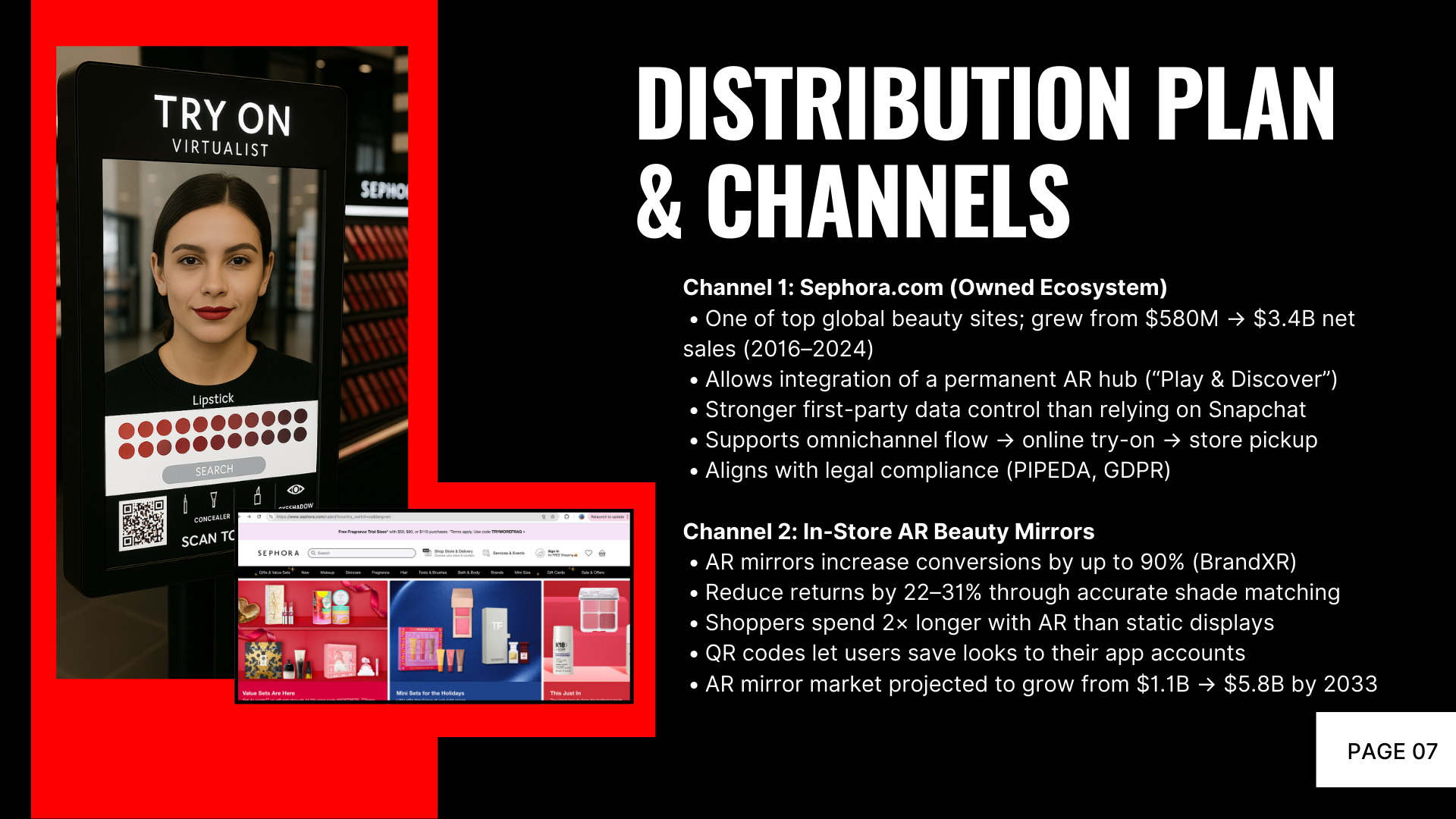
Channel 1: Sephora.com AR hub — a permanent "Play & Discover" section giving Sephora full first-party data control, removing Snapchat dependency, and supporting the omnichannel loop from try-on to pickup.
Channel 2: In-store AR beauty mirrors — increase conversions up to 90%, reduce returns 22–31%, keep shoppers engaged 2x longer. QR codes let users save looks to their app account.
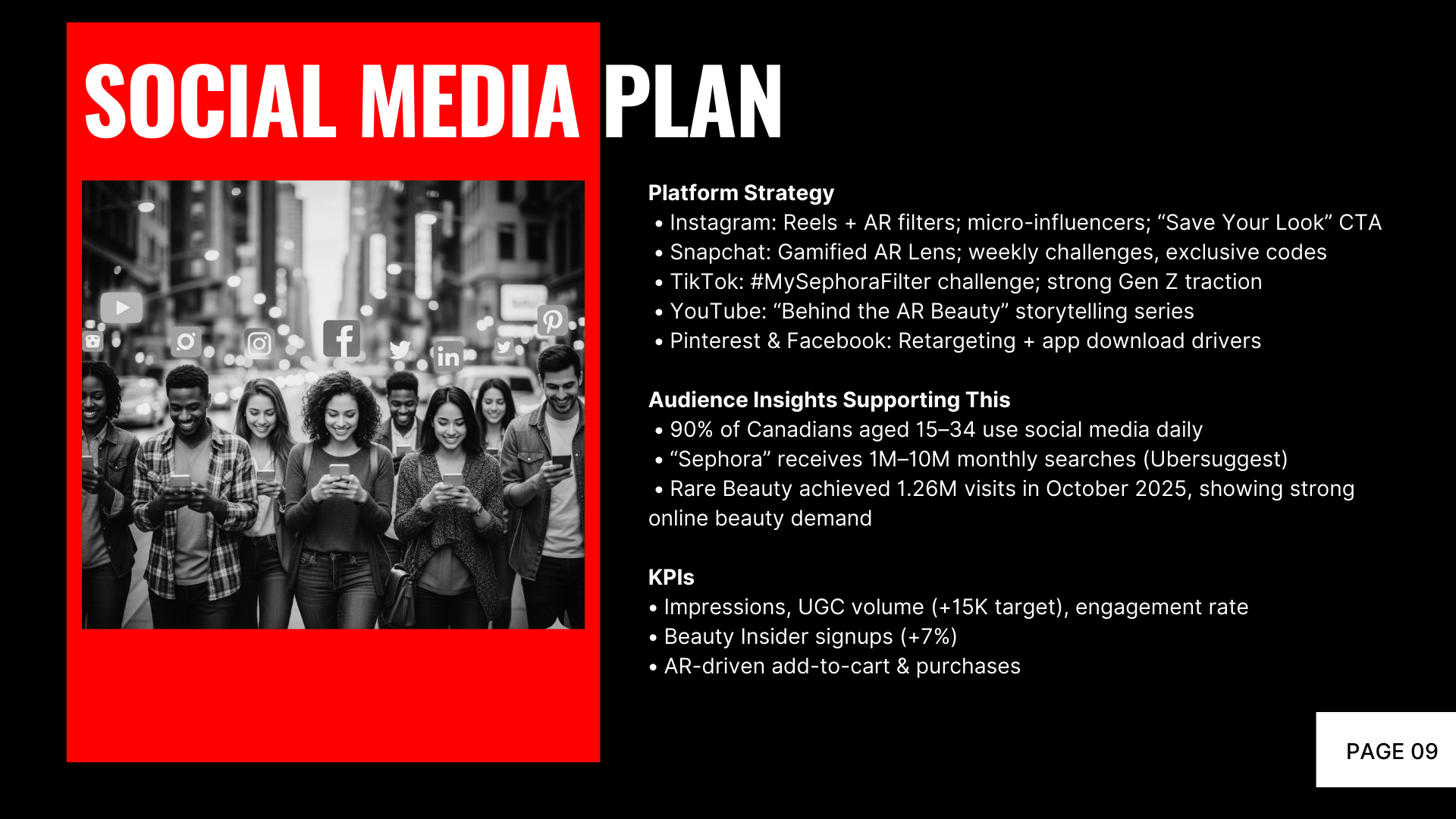
Social strategy: Instagram Reels + AR filters, Snapchat gamified lens, TikTok #MySephoraFilter challenge, YouTube storytelling series, Pinterest/Facebook retargeting.
Phase 05
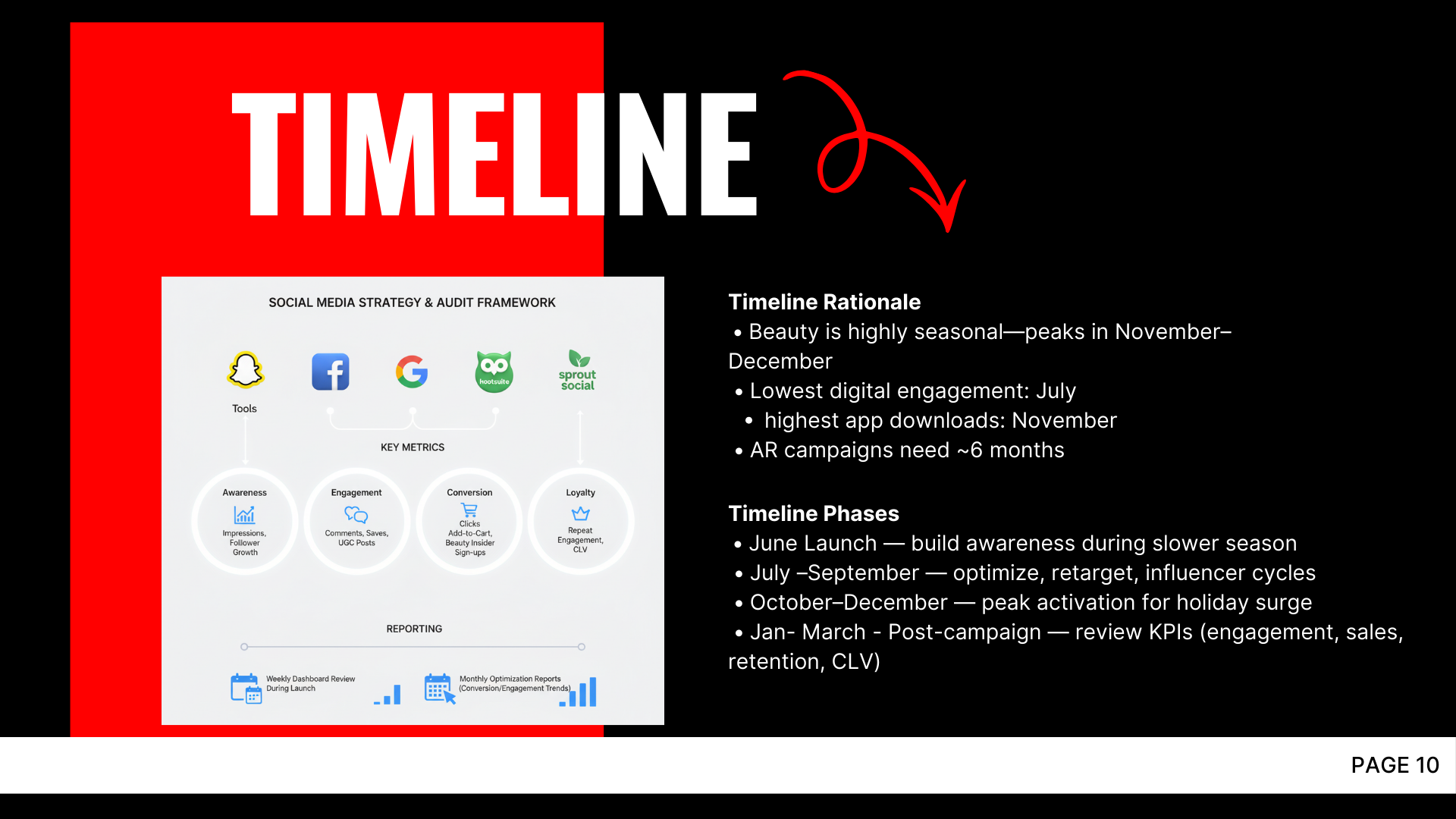
June: launch to build awareness. July–September: optimize, retarget, influencer cycles. October–December: peak holiday activation. January–March: post-campaign KPI review covering engagement, sales, retention, and CLV.
KPIs: impressions, UGC volume (+15K target), Beauty Insider signups (+7%), AR-driven purchases — tracked via weekly dashboards and monthly optimization reports.
UX Design · Health · Pet Care
A pet advice app for owners who don't have easy access to a vet — providing accessible, reliable guidance on pet health, symptoms, and care.
Program
Masters of Digital Experience Innovation, University of Waterloo
Status
In progress — full case study coming soon